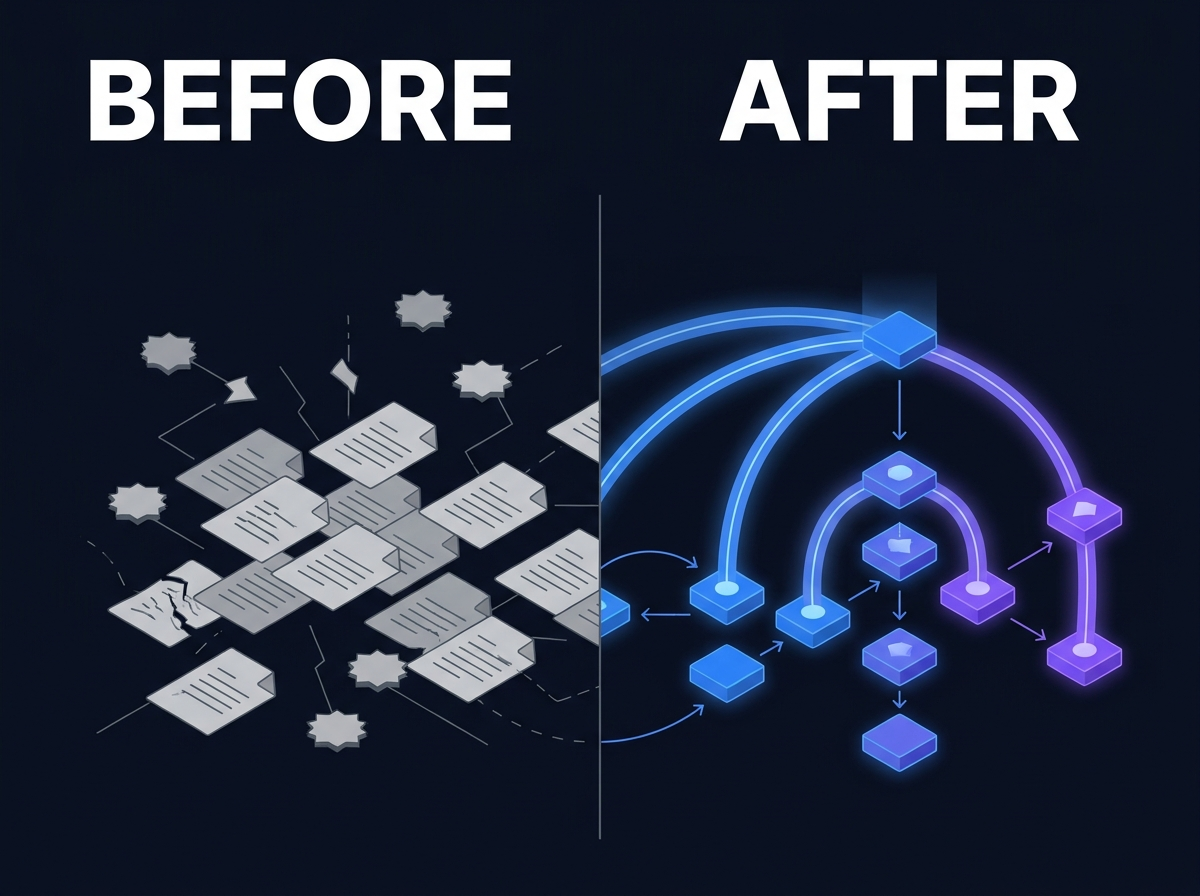
Private AI vs Public AI: What Organizations Need to Know
lightbulb Executive Summary
Public AI runs inference on vendor-controlled infrastructure. Private AI runs inference inside a boundary the customer controls. The choice is not about which approach is "smarter." It is about where data is processed, who can access it, how outputs are audited, and whether retrieval respects existing permissions. Public AI can be appropriate for low-sensitivity productivity tasks with clear policy guardrails. It is a poor default for client confidential material, regulated data, and export-controlled intellectual property. Most enterprise failures come from a governance gap: policies that describe ideal behavior while employees use the easiest available tool. A durable approach classifies data, defines deployment boundaries, builds governed corpora for retrieval, and applies AI only where infrastructure can enforce the rules.
Executive Summary
- Public AI runs inference on vendor-controlled infrastructure. Private AI runs inference inside a boundary the customer controls.
- The choice is not about which approach is "smarter." It is about where data is processed, who can access it, how outputs are audited, and whether retrieval respects existing permissions.
- Public AI can be appropriate for low-sensitivity productivity tasks with clear policy guardrails. It is a poor default for client confidential material, regulated data, and export-controlled intellectual property.
- Most enterprise failures come from a governance gap: policies that describe ideal behavior while employees use the easiest available tool.
- A durable approach classifies data, defines deployment boundaries, builds governed corpora for retrieval, and applies AI only where infrastructure can enforce the rules.
1. Introduction
Your organization almost certainly uses both kinds of AI already, whether or not IT has approved them.
Marketing drafts copy in a public chat assistant. Engineering experiments with code completion in a cloud IDE plugin. Legal reviews a vendor brochure promising "enterprise-grade" AI without explaining where prompts are logged. Meanwhile, security publishes a policy prohibiting submission of client data to third-party tools. Everyone nods. Work continues.
This is the practical tension behind the private AI vs public AI debate. The question is not whether AI belongs in the enterprise. Teams have already decided it does. The question is whether inference happens inside your control boundary or on someone else's.
For executives, the decision reduces to a short list of concerns: confidentiality, compliance, auditability, and whether AI outputs can be grounded in content users are actually allowed to see. This article explains both deployment models in plain terms, compares decision criteria without vendor hype, and outlines how organizations build a strategy that matches infrastructure to data sensitivity.
2. Problem Definition
Public AI in enterprise context
Public AI, for enterprise purposes, means AI inference delivered through shared cloud services operated by an external vendor. Users interact through web applications, APIs, or embedded features in productivity tools. The vendor controls the runtime environment, model hosting, logging practices, and subprocessors.
Enterprise tiers may add contractual protections, single sign-on, and administrative controls. The deployment boundary still sits outside the customer's direct infrastructure control unless the vendor offers a genuinely isolated private deployment option.
Public AI is optimized for accessibility. That is both its appeal and its risk.
Private AI in enterprise context
Private AI means AI inference executed inside an environment the customer controls: on-premises data centers, private cloud tenants, VPC-isolated deployments, or air-gapped facilities where required. Models may be hosted locally or in customer-managed infrastructure. Retrieval, logging, and access control integrate with the organization's identity and governance systems.
Private AI is not synonymous with "offline" or "open-source only." It is a control model. The customer defines where processing occurs, which corpora models may access, and how queries are recorded.
Data Sovereignty as the governing principle
Data Sovereignty is the requirement that an organization retains authority over where information resides, who processes it, and how it may be used. AI does not change that requirement. It amplifies the consequences of ignoring it.
When prompts include sensitive content, inference can reproduce, summarize, or transform material in ways that affect confidentiality and compliance. The deployment model determines whether those prompts and outputs stay inside organizational control.
Why the distinction matters now
Two forces converged. First, general-purpose AI tools became easy enough for any employee to adopt without a procurement cycle. Second, enterprises accumulated large unstructured corpora that are poorly governed for retrieval.
The result is shadow AI: fast public tools operating on content that was never classified for external processing. Security teams are asked to block what employees find productive. Lines of business are asked to wait for platforms that arrive late and under-specified. Neither side is wrong. The gap is architectural.
3. Why Existing Approaches Fail
Policy without enforcement
Many organizations responded to public AI risk with acceptable use policies that read well and enforce poorly. Policies tell employees not to paste client data into public tools. They rarely provide an approved alternative that is equally convenient for everyday tasks.
When the sanctioned path is slower than the shadow path, the shadow path wins. Governance becomes a document exercise.
Treating "enterprise tier" as a blanket approval
Vendor marketing uses "enterprise" to mean SSO, admin consoles, and billing contracts. Those features improve administration. They do not automatically place inference inside the customer's sovereignty boundary or guarantee that sensitive prompts will never be used for vendor model improvement.
Procurement teams need technical criteria, not adjectives.
Deploying AI before fixing findability
AI assistants that retrieve from unindexed file dumps produce confident wrong answers. Worse, they may retrieve content the asking user should not see if permissions are not enforced at query time.
Enterprise Search and Knowledge Management are prerequisites for grounded private AI, not late-phase enhancements.
One-size-fits-all rollout
Organizations that declare a single AI tool for all use cases ignore data classification. Public AI may be fine for public marketing drafts. It is inappropriate for matter files, patient records, classified engineering data, or unreleased financial statements.
Without classification, teams guess. Guessing creates incident stories that travel faster than policy updates.
Security blocking without replacement
Hard bans on public AI reduce visible risk while pushing usage to personal devices and unmanaged accounts. Security loses visibility. Legal loses audit trails. IT loses integration opportunities.
Effective programs pair restrictions with approved private paths that meet legitimate productivity needs.
4. Practical Examples
These examples describe common patterns. They are illustrative, not customer case studies.
Legal matter research
A law firm wants associates to summarize prior work product and regulatory guidance while drafting a client memo. Associates paste excerpts into a public chat tool because it is fast. The tool's data handling terms do not align with client confidentiality obligations. Partner review discovers the practice during a risk assessment.
A private AI approach runs inference inside firm-controlled infrastructure. Retrieval draws from governed matter corpora with matter-level permissions. Queries are logged for accountability. Associates get speed without outsourcing confidentiality to a shared cloud prompt history.
Government program documentation
A public-sector agency maintains policy documents, program records, and procurement artifacts across collaboration platforms. Staff experiment with public AI to draft briefings. Security flags data residency requirements that public SaaS cannot meet.
Private AI deployed in an approved boundary allows staff to work with agency corpora under existing access controls. Air-gapped or VPC-isolated options exist where policy requires them. The agency keeps authority over logs and runtime location.
Engineering design history
A manufacturer wants technicians to query decades of specifications, test results, and maintenance notes. Some material is export-controlled. Public AI is ruled out. Technicians continue asking retired engineers by phone.
Private AI connected to classified and unclassified corpora separately ensures retrieval respects clearance and export rules. Technicians query approved sources inside the boundary. Answers cite documents the technician already had permission to view.
Corporate knowledge onboarding
A professional services firm hires dozens of consultants annually. Onboarding depends on finding templates, prior deliverables, and methodology guides scattered across repositories. A public AI pilot indexes a sloppy export of SharePoint folders. Results include client names from restricted engagements.
Private AI with permission-aware retrieval and curated Knowledge Management taxonomies produces onboarding answers grounded in content new hires are allowed to see. Compliance reviews the retrieval layer, not just the policy PDF.
5. Business Impact
Confidentiality and client trust
Professional services, legal, healthcare, and government organizations sell trust. Demonstrating that client or citizen data was processed on public infrastructure without explicit approval damages relationships and invites contractual breach claims.
Regulatory and contractual exposure
Data protection regimes and sector regulations increasingly ask where processing occurs, how long prompts are retained, and whether subprocessors participate. Public AI shifts those questions to vendor transparency reports. Private AI keeps answers inside organizational control systems.
Audit and incident response
When a sensitive output appears in the wrong channel, investigators ask who queried what and which sources were retrieved. Public tools may provide limited enterprise logs. Private deployments integrate with SIEM, identity platforms, and content governance workflows investigators already use.
Operational continuity
Vendor policy changes, model deprecations, and regional outages affect public AI availability. Organizations with private deployment options retain more control over upgrade timing, model selection, and fallback behavior for critical workflows.
Shadow AI tax
Unchecked public AI use creates rework: legal reviews of questionable outputs, security investigations of data leakage rumors, and IT time spent blocking domains instead of delivering approved tools. The tax is paid in attention, not line items.
6. Recommended Approach
Step 1: Classify data and use cases
Create a simple matrix executives can understand. Rows are data classes: public, internal, confidential, regulated. Columns are use cases: drafting, summarization, search assistance, code help, media analysis. Mark each intersection approved, prohibited, or allowed only with private deployment.
Classification beats slogans. It gives employees clarity and gives security enforceable criteria.
Step 2: Define the deployment boundary
For each approved private use case, specify acceptable boundaries: on-premises, private cloud, isolated tenant, air-gapped. Document residency, key management, logging, and identity integration requirements.
Match boundary strictness to data class. Do not deploy air-gapped complexity for public marketing drafts.
Step 3: Build governed corpora
Identify sources AI may reference: matter systems, engineering repositories, policy libraries, approved media archives. Apply metadata, lifecycle rules, and permission models before enabling retrieval.
Ungoverned file dumps produce ungoverned answers.
Step 4: Enforce permission-aware retrieval
Retrieval must respect source-system access controls. If a user cannot open a document in the native repository, AI should not surface its contents. This is non-negotiable for private enterprise AI.
Step 5: Log, review, and train
Record queries and source citations for sensitive classes. Define human review requirements for high-risk outputs. Train employees on approved tools and on why shortcuts create organizational risk.
Step 6: Provide approved public paths where appropriate
Public AI is not evil. It is misapplied when used for the wrong data class. Offer approved public tools for low-sensitivity tasks so employees are not incentivized to smuggle confidential content into consumer accounts.
Comparison table: decision criteria
| Criterion | Public AI (typical SaaS) | Private AI (customer-controlled) |
| Data residency | Vendor-defined regions | Customer-defined boundary |
| Prompt and output logging | Vendor-controlled | Customer-integrated |
| Model training on prompts | Vendor-dependent; read terms | Customer-controlled policy |
| Retrieval permissions | Often limited or bolt-on | Should mirror source ACLs |
| Audit for investigations | Variable export | Integrated with enterprise tooling |
| Time to first value | Fast for individuals | Requires corpus and governance work |
| Best fit | Low-sensitivity productivity | Confidential, regulated, export-controlled |
7. Where Prodigy Fits
Prodigy is built for organizations that need AI capability without surrendering Data Sovereignty. Private AI runs on infrastructure the customer controls, with retrieval grounded in governed enterprise content rather than ad hoc uploads.
The platform connects to existing repositories through Platform Integrations and applies Enterprise Search so models reference material users are authorized to see. Knowledge Management provides taxonomy, metadata, and lifecycle structure that make corpora trustworthy over time.
For regulated contexts, solution paths such as Legal Knowledge and Matter Search and Private AI and Enterprise Search for Government reflect deployment and confidentiality requirements common in those environments.
Prodigy does not position public AI as the enemy. It positions control, permissions, and governance as prerequisites for applying AI to content that matters. Organizations choose private deployment when confidentiality, audit, and sovereignty requirements are non-negotiable. Prodigy supplies the platform layer that makes private AI usable on real enterprise knowledge, not just on sanitized demos.
8. Conclusion
Private AI and public AI are deployment choices, not moral categories. Both can be appropriate when matched to data sensitivity and enforced with clear policy.
Enterprise trouble starts when convenience drives behavior and infrastructure lags behind. Employees reach for public tools because they work. Security says no because the risks are real. Leadership stalls because the conversation stays abstract.
The constructive path is classification, boundary definition, governed corpora, and permission-aware retrieval. Public AI may remain part of the toolkit for low-risk work. Private AI becomes the standard for content that defines organizational trust.
The organizations that navigate this well will not be the ones with the longest policy PDF. They will be the ones whose approved tools are as usable as the shadow alternatives, and whose infrastructure can prove what happened when someone asks.
9. CTA
Explore how Prodigy approaches private AI Primary: Private AI
Continue your evaluation Secondary: Register for the evaluation portal
Request a demo Tertiary: Request a Demo
FAQ
Is private AI the same as on-premises AI? Not always. Private AI means customer-controlled inference boundaries. That can be on-premises, private cloud, or isolated VPC deployments. On-premises is one implementation option.
Does private AI mean weaker models? No. Model capability depends on the models deployed and the quality of governed corpora available for retrieval. Private deployment is about control and permissions, not inherently reduced intelligence.
Can public AI ever be appropriate in enterprise? Yes, for low-sensitivity tasks with clear policies, approved tools, and no confidential or regulated content in prompts. Problems arise when public tools become the default for all work.
Who should approve private AI deployment? Approval is joint. Security defines boundary and logging requirements. Legal and compliance define data classes. IT and architecture implement integration. Line-of-business sponsors define use cases and corpus ownership.
Does private AI eliminate AI risk? No. It reduces confidentiality and sovereignty risk when implemented with permission-aware retrieval, logging, and governance. Ungoverned private AI can still produce wrong answers and access control failures.
Related Reading
| Title | Type | Path |
| What Is Dark Data and Why Most Organizations Ignore It | Article (Wave 1) | `/resources/articles/what-is-dark-data/` |
| Enterprise Search Is Not Knowledge Management | Article (Wave 1) | `/resources/articles/enterprise-search-vs-knowledge-management/` |
| Security and Sovereignty | Platform page | `/platform/security-sovereignty/` |
| Legal Knowledge and Matter Search | Solution page | `/solutions/legal/` |