
Research Knowledge and Data Discovery
Research organizations generate papers, datasets, lab notebooks, microscopy, field recordings, and project files across instruments, shared drives, and collaboration platforms. Formats vary by discipline. Sponsored research, consortia, and industry partnerships require strict collaboration boundaries. Unpublished findings and pre-publication data need protection. Literature and internal results live in separate systems. Legacy notebooks and media archives are difficult to search. Export control and IP policies restrict where data can be processed.

Why Traditional Approaches Fail
Discipline-specific tools manage one format well but not cross-format discovery. Institutional repositories handle publications but not linked raw data and lab media. Generic cloud search ignores provenance and collaboration agreements. OCR and transcription are often sent to external APIs, conflicting with sensitive research policies. Public AI tools are unsuitable for unpublished results and licensed third-party content. Dark archives accumulate on storage with no inventory or governance path.
Prodigy unifies publications, datasets, lab notes, and research media under Knowledge Management with provenance and access rules. Enterprise Search spans internal corpora, licensed collections where connected, and project-linked artifacts. OCR and Video Intelligence run on your infrastructure. Dark Data Intelligence helps teams inventory unused archives. Private AI supports summarization and Q&A on governed datasets only. Collaboration boundaries separate sponsor, consortium, and internal work.
Explore Knowledge Management
Relevant Capabilities
Knowledge Management
Link experiments, publications, datasets, and media with provenance.
Read more →Enterprise Search
Discover literature, lab notes, and project files in one query.
Read more →Dark Data Intelligence
Find unused archives before value is lost or storage cost grows.
Read more →OCR
Digitize historical notebooks and scans on-premises.
Read more →Video Intelligence
Index microscopy, field video, and seminar recordings.
Read more →Private AI
Query and summarize governed research corpora inside your boundary.
Read more →Digital Asset Management
Govern research imagery and media assets with metadata.
Read more →Security & Sovereignty
Protect unpublished findings and meet collaboration agreements.
Read more →Security & Governance Considerations
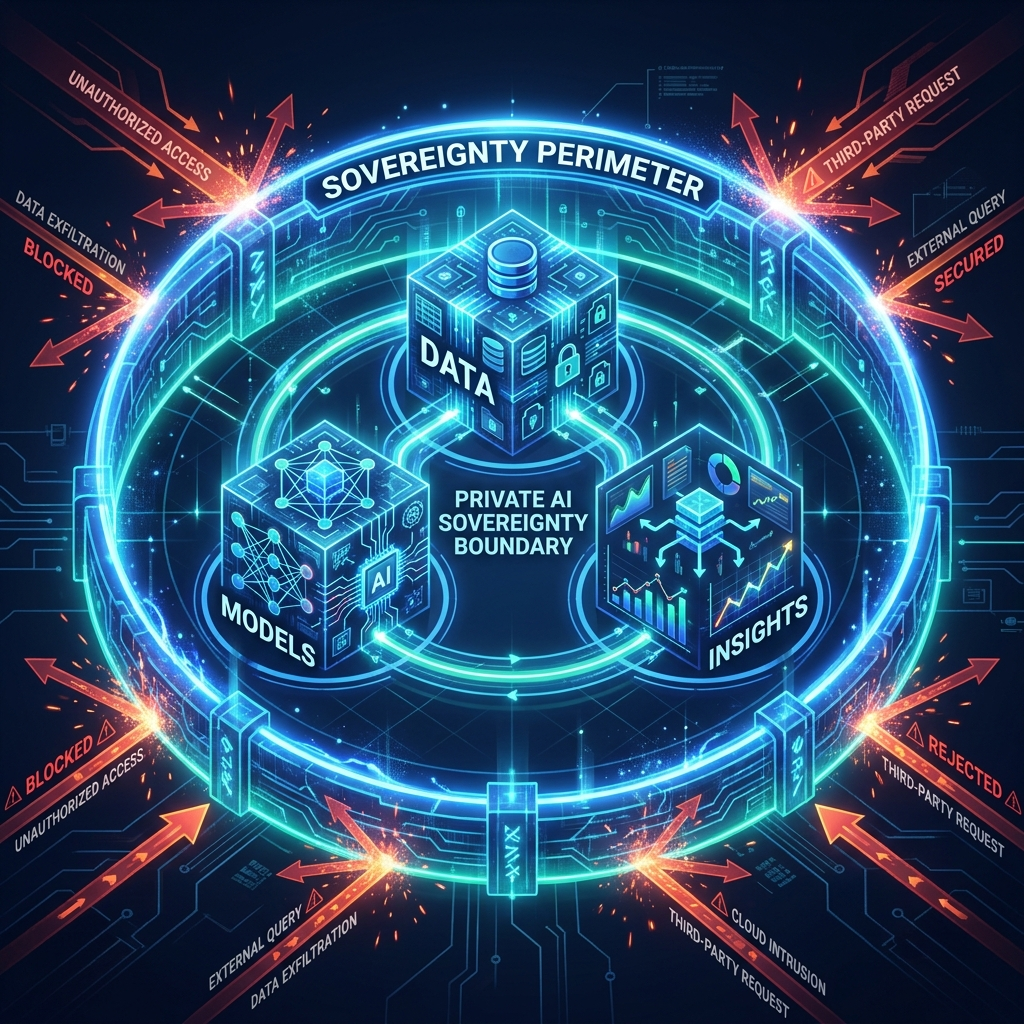
Research data often includes pre-publication results, human subjects constraints, licensed content, and export-controlled material. Prodigy processes and stores content on infrastructure you control. Access policies enforce collaboration and sponsorship boundaries. Audit logs support data stewardship review. Private AI does not send corpora to external training pipelines. OCR and transcription run without mandatory public API calls.
Provenance
Track lineage from raw data to publication.
Collaboration boundaries
Separate sponsor, consortium, and internal access.
On-premises processing
OCR, search, and Private AI inside your perimeter.
Example Use Cases

Literature and internal results
Researchers search prior studies, internal reports, and linked datasets for a program without separate repository queries.

Lab notebook digitization
Teams OCR historical notebooks and link entries to current projects and publications.

Instrument and field media
Labs index video and imagery from experiments with timecode and project metadata for review.

Sponsored program boundaries
Administrators enforce access separation between sponsor deliverables, consortium data, and internal work.
Who this solution is for
Research directors
Improve discovery without weakening data controls.
Chief scientific officers
Align research infrastructure with IP policy.
Lab informatics managers
Connect instruments, repositories, and search.
Data stewards
Govern provenance, access, and archive inventory.
Sponsored research administrators
Enforce sponsor and consortium data boundaries.
University IT and library leads
Deploy search across publications and research data.
Expected Business Outcomes
Researchers spend less time locating prior work across formats and systems. Data stewards gain inventory visibility into dark archives. Compliance with sponsorship and IP agreements improves when boundaries are enforced in search and access. Lab and IT teams reduce fragmented point solutions for media and document discovery. Unpublished work stays inside approved environments when Private AI is introduced.

Explore research knowledge discovery on your infrastructure
Request a demo to review search, provenance, and governance across your research content types.
Request a Demo